Solana has become one of the most talked-about cryptocurrencies in recent years. Known for its speed, low fees, and growing ecosystem, it has attracted both retail investors and institutions.
But the real question is:
Is Solana still a good investment in 2026?
Let’s break it down in a clear, practical way—without hype or confusion.
What Makes Solana Stand Out?
Before talking about investment potential, it’s important to understand why Solana gets so much attention.
1. High-Speed Blockchain
Solana is designed to process thousands of transactions per second, making it one of the fastest blockchains in the industry.
This makes it ideal for:
- DeFi platforms
- NFT marketplaces
- Gaming applications
- Low Transaction Costs
Unlike some networks where fees can spike, Solana transactions typically cost a fraction of a cent.
That’s a big advantage for users and developers.
- Expanding Ecosystem
Solana’s ecosystem continues to grow with:
- New decentralized apps (dApps)
- NFT platforms
- DeFi protocols
- Web3 startups
This growth directly impacts long-term value.
Solana Investment Potential in 2026
Bullish Factors
Strong Developer Activity
More builders are choosing Solana, which helps create long-term demand for SOL tokens.
Institutional Interest
Large investors are paying closer attention to high-performance blockchains like Solana.
This can increase liquidity and stability.
Real-World Use Cases
Solana is being used for:
- Payments
- Gaming ecosystems
- NFT economies
- Financial applications
The more real-world usage, the stronger its foundation.
Risks You Should Not Ignore
No investment is risk-free—especially in crypto.
Network Reliability Issues
Solana has faced outages in the past. While improvements are ongoing, reliability remains a key concern.
Competition
Solana competes with major players like:
- Ethereum
- Avalanche
- Binance Smart Chain
Staying ahead won’t be easy.
Market Volatility
Crypto markets are highly volatile, and Solana is no exception.
Prices can move quickly—both up and down.
Solana Price Prediction: What Experts Are Saying
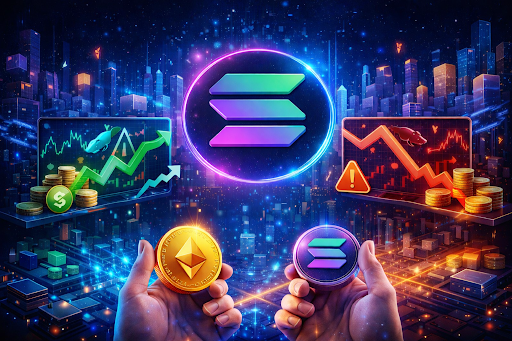
While no prediction is guaranteed, analysts generally outline three possible scenarios:
Bullish Scenario
- Continued ecosystem growth
- Improved network stability
- Increased adoption
Potential outcome: strong upward trend over time
Neutral Scenario
- Steady development but slower adoption
- Mixed market sentiment
Potential outcome: gradual growth or sideways movement
Bearish Scenario
- Technical setbacks or outages
- Regulatory pressure
- Strong competition
Potential outcome: price corrections
Solana vs Ethereum: Which Is the Better Investment?
This is one of the most common comparisons.
Solana Advantages
- Faster transactions
- Lower fees
- Better scalability
Ethereum Advantages
- Larger ecosystem
- More decentralized
- Stronger institutional trust
In simple terms:
Solana is the high-growth challenger, while Ethereum is the established leader.
Who Should Consider Investing in Solana?
Solana may be suitable for:
- Investors looking for high-growth potential
- Those interested in emerging blockchain technologies
- People comfortable with moderate to high risk
It may not be ideal for those seeking low-risk, stable investments.
Key Takeaways
- Solana offers strong potential due to speed, low fees, and ecosystem growth
- Risks include network issues, competition, and market volatility
- Long-term success depends on adoption and reliability
- It remains a high-risk, high-reward investment
Final Verdict: Is Solana a Good Investment in 2026?
Solana continues to be one of the most promising projects in the crypto space—but it’s not without challenges.
If development continues and adoption grows, Solana could deliver strong returns over time.
However, investors should be prepared for volatility and uncertainty.
The smartest approach?
Do your research, diversify your portfolio, and invest with a long-term perspective.