For years, Ethereum has held a dominant position in the blockchain world—especially when it comes to decentralized finance (DeFi), NFTs, and smart contracts. But the landscape is evolving fast.
Solana, already known for its high-speed and low-cost transactions, is now pushing forward with new innovations that could reshape the competitive balance. As developers and institutions look for scalable solutions, Solana’s latest advancements are starting to draw serious attention.
What’s Behind Solana’s Latest Innovation?
Solana’s recent developments are focused on improving performance, reliability, and developer experience. While the blockchain has always emphasized speed, its latest upgrades aim to refine the network in ways that make it more attractive for large-scale adoption.
These innovations typically include:
- Enhancements to network stability and uptime
- Improved scalability for handling higher transaction volumes
- Tools designed to simplify development and deployment
- Infrastructure upgrades to support enterprise-level applications
Together, these improvements signal a more mature and robust ecosystem.
Why Ethereum’s Dominance Is Being Challenged
Ethereum remains the leading platform for smart contracts, but it faces ongoing challenges—particularly around scalability and transaction costs.
Even with layer-2 solutions, some users and developers are seeking alternatives that offer:
- Lower fees for everyday transactions
- Faster processing speeds
- Simpler user experiences
Solana’s approach directly addresses these concerns, making it an increasingly viable competitor.
Solana’s Key Advantages
Solana’s growing appeal comes down to a few core strengths:
Speed and Efficiency
Solana is designed to handle thousands of transactions per second, allowing for near-instant confirmations. This level of performance is especially valuable for applications that require real-time interactions.
Low Transaction Costs
Cost remains a major barrier in blockchain adoption. Solana’s low fees make it easier for users to engage with DeFi, NFTs, and other Web3 applications without worrying about high expenses.
Expanding Ecosystem
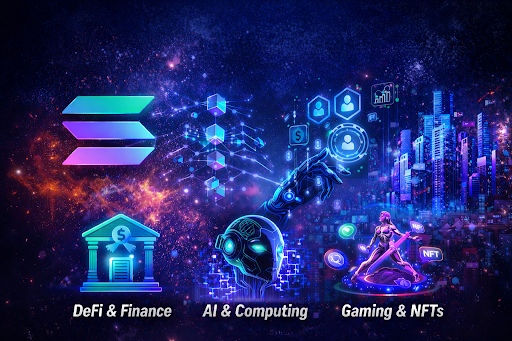
The Solana ecosystem continues to grow across multiple sectors:
- DeFi platforms
- NFT marketplaces
- Web3 applications
- Gaming and metaverse projects
This diversity is helping create a strong network effect.
Developer Migration: A Key Trend
One of the most telling signs of Solana’s momentum is the increasing number of developers exploring or migrating to the network.
Developers are drawn by:
- Lower operational costs
- Faster application performance
- Access to a growing user base
As more projects launch on Solana, the competition with Ethereum becomes more direct.
Institutional Interest Is Rising
It’s not just developers taking notice. Institutional investors are also beginning to explore Solana more seriously.
They are particularly interested in:
- Scalable infrastructure for financial applications
- Lower-cost transaction environments
- Emerging ecosystems with growth potential
This shift could play a major role in shaping the future balance of power in the crypto market.
Challenges Solana Still Faces
Despite its progress, Solana is not without challenges:
- Strong competition from Ethereum and other blockchains
- The need to maintain consistent network performance
- Ongoing regulatory developments affecting the industry
Ethereum also continues to evolve, meaning the competition is far from one-sided.
Can Solana Really Compete with Ethereum?
Rather than replacing Ethereum, Solana may be carving out its own space in the blockchain ecosystem.
Different networks can coexist by serving different needs:
- Ethereum may continue to dominate in security-focused applications
- Solana could lead in speed-sensitive and cost-efficient use cases
This multi-chain future is becoming an increasingly likely scenario.
What This Means for the Future of Blockchain
The growing competition between Solana and Ethereum is ultimately a positive development for the industry.
It encourages:
- Faster innovation
- Better user experiences
- Lower costs across platforms
For users and developers, this competition creates more options and drives progress.
Final Thoughts
Solana’s latest innovations are not just technical upgrades—they represent a broader push toward scalability and real-world usability.
While Ethereum remains a dominant force, Solana is steadily positioning itself as a serious challenger. The outcome of this competition will depend on continued development, adoption, and how each network evolves over time.
For now, one thing is clear: the blockchain space is entering a new phase, and Solana is playing a key role in shaping it.