The Web3 space is evolving rapidly, and Solana has emerged as one of the most active ecosystems driving this transformation.
With its fast transaction speeds and low fees, Solana has become a preferred platform for developers building the next generation of decentralized applications. Today, a wave of new projects is redefining what Web3 can look like—not just in theory, but in real-world use.
So how exactly are these new Solana projects shaping the future of Web3?
Why Solana Is Attracting New Projects
Before diving into the projects themselves, it’s important to understand why Solana is becoming a hotspot for innovation.
Solana offers:
- High-speed transactions capable of handling thousands per second
- Extremely low fees, making apps accessible to everyday users
- A growing developer community and ecosystem
These advantages allow developers to build scalable applications without the limitations seen on other blockchains.
The Rise of Real-World Use Cases
One of the biggest shifts in Web3 is the move toward real-world applications.
New Solana projects are focusing on:
- Payments and financial services
- Decentralized mapping and infrastructure
- Tokenized real-world assets
Instead of just speculative tokens, these projects are solving real problems, which is critical for long-term adoption.
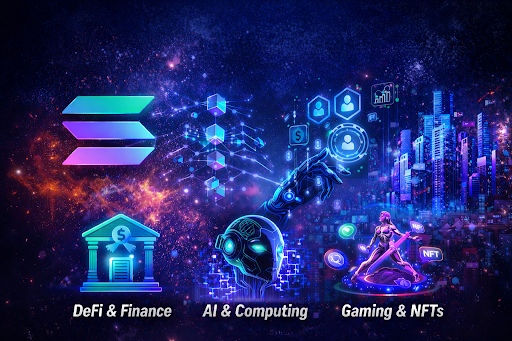
DeFi Innovation on Solana
Decentralized finance continues to be a major pillar of Web3.
New Solana-based DeFi platforms are:
- Simplifying lending and borrowing
- Automating yield strategies
- Improving liquidity access
These tools are making financial services more open and efficient, without relying on traditional banks.
AI and Computing Integration
Another emerging trend is the combination of AI and blockchain.
Some Solana projects are building:
- Decentralized GPU marketplaces
- AI-powered applications
- Data-sharing networks
This integration could unlock new possibilities, especially as demand for computing power continues to grow.
Gaming and Digital Ownership
Web3 gaming is also gaining momentum on Solana.
Developers are creating:
- Play-to-earn and move-to-earn games
- NFT-based assets with real ownership
- Interactive digital economies
Solana’s speed makes it ideal for gaming experiences that require real-time interaction.
Decentralized Infrastructure (DePIN)
A new category gaining attention is decentralized physical infrastructure.
Projects in this space focus on:
- Wireless networks
- Mapping systems
- Data collection
These applications connect blockchain technology to the physical world, expanding Web3 beyond the digital space.
Why This Matters for the Future of Web3
The next phase of Web3 will not be driven by hype—it will be driven by utility.
New Solana projects are contributing to this shift by:
- Building practical applications
- Improving user experience
- Expanding real-world adoption
As more people interact with these tools, Web3 becomes more accessible and meaningful.
Challenges Facing Solana Projects
Despite the rapid growth, challenges remain.
- Network stability concerns have been raised in the past
- Competition from other blockchains continues
- Regulatory uncertainty can affect development
Addressing these issues will be key to sustaining long-term growth.
What Investors and Users Should Watch
If you’re following the Solana ecosystem, there are a few key things to monitor:
- Growth in active users and developers
- Adoption of real-world applications
- Expansion of DeFi and infrastructure projects
- Overall market trends in crypto
These indicators can provide insight into where the ecosystem is heading.
Final Thoughts
New Solana projects are doing more than just adding to the crypto market—they are helping define the future of Web3.
By focusing on speed, usability, and real-world impact, Solana is becoming a major platform for innovation.
While challenges still exist, the direction is clear: Web3 is moving toward practical applications, and Solana is playing a key role in that transformation.