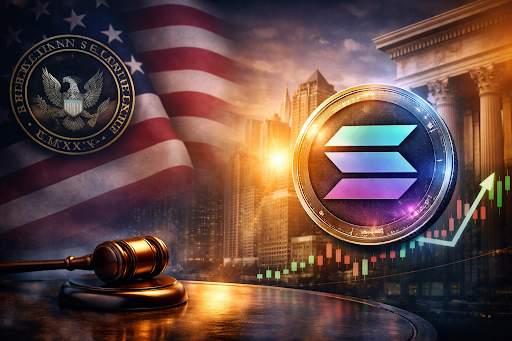
In a major development for the cryptocurrency industry, the U.S. Securities and Exchange Commission (SEC) has officially classified Solana (SOL) as a digital commodity. This decision marks a turning point not only for Solana but for the broader crypto market, signaling a shift toward clearer regulatory frameworks in the United States.
For investors, developers, and institutions, this ruling could reshape how crypto assets are perceived, traded, and integrated into traditional finance.
What Does “Digital Commodity” Mean for Solana?
By labeling Solana as a digital commodity, the SEC is effectively placing SOL in a regulatory category similar to assets like Bitcoin and, in some contexts, Ethereum.
This distinction matters because:
- Commodities face fewer regulatory restrictions compared to securities
- Trading becomes more accessible across exchanges and platforms
- Regulatory uncertainty is significantly reduced
In simple terms, Solana is no longer under the looming threat of being treated as an unregistered security, a concern that has affected many altcoins in recent years.
Why This Is a Big Deal for Investors
Regulatory clarity has long been one of the biggest barriers to institutional adoption of cryptocurrency. With this new classification:
Institutional Capital May Flow In
Large financial players such as hedge funds, asset managers, and pension funds are more likely to invest in assets with clear legal status. Solana now meets that requirement.
Increased Market Confidence
Retail and professional investors alike tend to favor assets with reduced legal risk. This ruling strengthens confidence in SOL as a long-term investment.
Potential for Financial Products
The commodity classification could accelerate the development of:
- Solana-based ETFs
- Futures and derivatives markets
- Tokenized financial products
How This Impacts Institutional Adoption
The SEC’s decision opens the door for deeper engagement from traditional finance. Financial institutions that were previously cautious may now:
- Add SOL to diversified crypto portfolios
- Build financial products around the Solana ecosystem
- Integrate Solana into payment and settlement systems
This is particularly relevant as tokenized assets and on-chain finance continue gaining traction in 2026.
What It Means for the Solana Ecosystem
Beyond price and investment narratives, this ruling strengthens Solana’s position as a leading blockchain for:
- Decentralized finance (DeFi)
- Tokenized real-world assets (RWAs)
- Payments and stablecoins
- Web3 applications and infrastructure
Developers may also feel more confident building on Solana, knowing the network operates within a clearer regulatory framework.
Solana Price Outlook After the SEC Decision
Historically, regulatory clarity has acted as a bullish catalyst for crypto assets. While short-term volatility is always possible, the long-term outlook for SOL may improve due to:
- Increased institutional demand
- Reduced legal risk
- Growing ecosystem adoption
If momentum continues, analysts believe Solana could enter a new growth phase, especially if supported by broader crypto market strength.
What This Means for the Broader Crypto Market
The SEC’s classification of Solana could set a precedent for other cryptocurrencies. It raises important questions:
- Will more altcoins be classified as commodities?
- Could this accelerate crypto regulation in the United States?
- How will this impact competition between blockchains?
The regulatory landscape is evolving quickly, and this decision may be one of the most important steps toward mainstream adoption.
Final Thoughts
The SEC declaring Solana a digital commodity is more than just a regulatory update. It represents a defining moment for the crypto industry.
For Solana, it removes a major barrier to growth. For investors, it provides clarity. And for the broader market, it signals progress toward integration with traditional finance.
As 2026 unfolds, attention will shift to how Solana leverages this opportunity and whether other cryptocurrencies receive similar treatment.