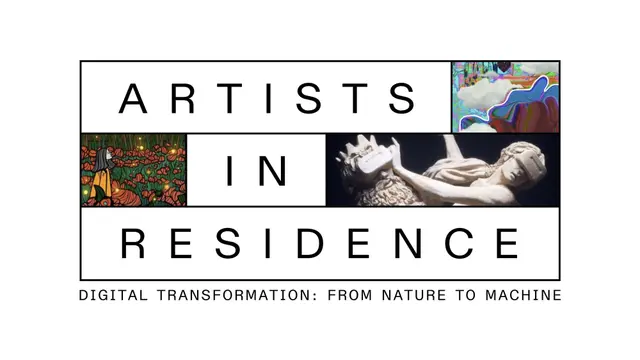
In December 2024, Solana planted its flag at one of the world’s most prestigious contemporary art fairs. The Artists in Residence exhibition — Solana’s second appearance at Art Basel Miami Beach — drew thousands of attendees through The Port Miami in Wynwood for three days of digital art that explored the theme “Digital Transformation: From Nature to Machine.” Eighteen months later, that showcase reads less like a community event and more like a strategic inflection point that helped reshape where digital artists actually want to mint in 2026.
This is the retrospective the moment deserves. Below: what the exhibition actually demonstrated, where the artists went next, what it meant for Solana’s NFT market position, and how the same energy translates into 2026’s broader consumer-crypto thesis.
What the 2024 Showcase Actually Was
Art Basel Miami Beach is the U.S. flagship of the global Art Basel franchise — three days every December that bring together over 250 galleries from 30+ countries and roughly 80,000 attendees. Getting a foothold there isn’t a marketing exercise; it’s a credentialing event. Solana returned for its second showcase with Artists in Residence, a “living studio” format that let attendees watch creative processes in real time and interact directly with artists who had built their careers on Solana.
The featured residents covered a deliberately broad range: Leo Caillard, the French sculptor known for blending classical marble figures with cutting-edge digital forms; Laura El, the New York illustrator whose narrative cityscapes had found a sustainable audience on Solana; and Lance Weiler, the Sundance Screenwriters Lab alum and Columbia University professor whose work has appeared at MoMA, the New Museum, and the Tribeca Film Festival.
Additional artists on display included Ira Greenberg, Degen Poet, Tiiiny Denise, Duke +1, Alkan Avcıoğlu, Jake Andrew, LowBrow, and Joice Loo — a roster that intentionally spanned generative artists, illustrators, mixed-media practitioners, and writers. The whole showcase was supported by The Render Network, the decentralized GPU rendering platform built on Solana, which committed over $100,000 in artist grants during the event and announced its AI Fellowship Program pairing technical hackers with artists.
Why the Theme Mattered: Nature to Machine
The 2024 theme — “Digital Transformation: From Nature to Machine” — was sharper than typical crypto art curation. Most blockchain art events frame technology as the protagonist. By contrast, the Solana showcase positioned technology as an extension of organic systems rather than a replacement for them. That subtle reframing matters because it’s the argument digital art has needed to make for a decade: code is a medium, not a marketing gimmick.
Leo Caillard captured the framing cleanly when he reflected on his work: “The tech in the Solana ecosystem pushes the limits of digital art, allowing me to integrate my classical art background with modern practices. The Solana community focuses on creating meaningful connections between physical and digital art, making it a perfect environment for innovation and exploration.” Laura El echoed the practical side: “Building on Solana has been life-changing for me as an artist. It has allowed me to create and share the art I love, rather than working on commissions for others.”
Lance Weiler, speaking from the position of a multi-decade media artist with major museum credentials, framed why Solana specifically: “The Solana ecosystem has created a space where digital art can thrive natively onchain. There is a vibrant arts community and an opportunity to leverage innovative tools.” That’s the kind of endorsement that doesn’t come cheap from someone who has shown work at the New Museum and Cannes.
Where the Featured Artists Are Now in May 2026
Eighteen months on, the trajectory of the 2024 cohort tells the real story. Leo Caillard expanded his hybrid sculpture-and-digital practice with new mints across Magic Eden and Exchange.Art, while continuing to exhibit physical work in major Paris galleries. Laura El built a dedicated collector base on Solana strong enough that she now releases primary drops directly without intermediary representation. Lance Weiler integrated Solana attestation tooling — released via the Solana Attestation Service in mid-2025 — into his interactive storytelling projects, using onchain credentials for audience participation in narrative experiences.
The Render Network grants from the 2024 event seeded a wave of GPU-rendered works that hit Magic Eden and Tensor through 2025. Render itself remains one of the strongest DePIN tokens on Solana, and its AI Fellowship Program produced over a dozen documented immersive art installations across 2025 — including pieces shown at Devcon, Permissionless, and Solana Breakpoint Singapore.
What the Showcase Revealed About Solana’s NFT Market Position
The Art Basel timing was not accidental. December 2024 was the peak of Solana’s most recent NFT cycle expansion, with monthly trading volume across Magic Eden and Tensor combined regularly exceeding $200 million. As of early 2026, Solana’s NFT market has matured into a duopoly: Magic Eden holds roughly 90% market share by transaction count and 50.4% by year-to-date volume, while Tensor captures the professional trader segment with 49.6% volume share and over 298,000 active addresses.
Magic Eden processes 45,000+ SOL in daily trading volume and lists 515,000+ NFTs across collections, while Tensor moves 16,000+ SOL daily but pulls more active wallets through features like its 3% upfront price-lock instrument and trader-focused dashboards. Tensor surpassed Magic Eden in active addresses (298K vs 267K), suggesting traders are gradually moving to more specialized platforms while casual collectors stick with Magic Eden’s broader interface.
Therefore, the Art Basel showcase wasn’t just art-world signaling — it was timing aligned with Solana NFT infrastructure entering its mature phase. Solana now ranks as the third-largest blockchain for NFTs by all-time sales volume, with cumulative trading near $4 billion across its history.
How This Connects to SOL’s 2026 Thesis
SOL trades at $87.44 on May 6, 2026, with a $50.45 billion market cap (CoinGecko, rank #7). The chart is bearish near-term — the 50-day SMA at $85.72 sits below the 200-day at $118.65 with a death cross still in effect, and resistance lives at $97 before $110–$120. However, the consumer-and-culture narrative that Art Basel kicked off in December 2024 has compounded steadily underneath the price action.
James Fowler, Senior Crypto Analyst at Solana Price Prediction, framed why this matters: “Crypto investors who only watch the chart miss what’s actually being built. Art Basel was Solana telling the cultural establishment ‘we belong here’ — and 18 months later, the artists who showed up that week are still building, still selling, and still attracting attention from outside crypto. That’s the slow-burn moat that doesn’t show up on candlestick charts.”
The connection runs deeper than vibes. Total stablecoin supply on Solana now sits near $17 billion, with real-world asset value above $1.85 billion (CoinMarketCap). Visa added Solana to its multi-chain stablecoin settlement network on May 3, 2026. Solana added over 11,500 new developers in 2025, ranking second only to Ethereum. Each of these data points compounds the thesis that Solana is becoming the default chain for consumer-facing crypto — and consumer applications need cultural credibility before they need infrastructure.
The Render Network Angle: Why Infrastructure Sponsorship Mattered
The Render Network’s $100,000 grant commitment at Art Basel 2024 was strategically smart for reasons that go beyond the dollar amount. Render’s GPU rendering platform powers high-end 3D production tools — Octane, Unreal Engine, Blender, Houdini — used by professional digital artists who don’t typically work in crypto. Funding artist work directly through grants is how Render embedded itself in workflows that would otherwise route to centralized cloud GPU providers.
Eighteen months later, that strategy has compounded. Render’s network now supports a meaningful share of high-end immersive art production on Solana, and the AI Fellowship Program announced at Art Basel produced direct integrations with Honeycomb Protocol’s gaming SDK and Magic Eden’s gallery showcases. Ultimately, the grant program wasn’t charity — it was distribution.
What’s Different About 2025 and 2026 Showcases
Solana didn’t slow down after the 2024 Art Basel moment. The 2025 follow-up at Art Basel Miami Beach expanded the residency format, adding more international artists and integrating Solana Mobile devices into the on-site experience. Looking ahead to December 2026, the framework is now established enough that Solana’s art presence at Miami functions less like a community event and more like a recurring cultural anchor — comparable to the way major auction houses or art-tech sponsors have built ongoing presences at the fair.
Meanwhile, the Solana art scene has fractured productively. Magic Eden hosts the broadest collector base. Exchange.Art remains the curator-driven home for serious 1/1 work. Tensor dominates fast-moving collection trading. Backpack’s NFT integration grew through 2025 and 2026 alongside its broader exchange ambitions. By contrast, Ethereum’s NFT scene has consolidated around OpenSea and Blur, with both platforms still leading on absolute volume but losing momentum on active wallet growth — exactly the shift the 2024 Art Basel showcase quietly previewed.
Verdict: Why the December 2024 Showcase Still Matters
Most crypto-art events are forgotten within a quarter. The December 2024 Art Basel Miami Beach Artists in Residence exhibition is different because it documented a specific moment — when Solana stopped being a memecoin chain in the mainstream art conversation and started being a serious destination for artists with real careers. The featured artists kept building. Render kept funding. Magic Eden and Tensor kept growing. The thesis has compounded.
For SOL holders, that compounding matters. Price targets of $130 to $185 by end of 2026 (base case) and $220 to $340 in 2027 (bull case) ultimately depend on Solana’s ability to sustain consumer relevance through a market downturn. Art Basel 2024 was one of the data points proving it can. The next showcase is December 2026 — and at this point, the only thing that would surprise is Solana not being there.
Frequently Asked Questions
What was the Solana Artists in Residence exhibition at Art Basel Miami Beach 2024?
It was Solana’s second appearance at Art Basel Miami Beach, hosted at The Port Miami in Wynwood from December 5–7, 2024. The exhibition featured Leo Caillard, Laura El, Lance Weiler, and roughly a dozen other artists exploring the theme “Digital Transformation: From Nature to Machine.” It was supported by Exchange.Art, BONK, and The Render Network.
Did the Art Basel showcase actually move SOL’s price?
Not directly or immediately. However, cultural credentialing events compound over multiple cycles. The artists who built careers on Solana through and after the 2024 showcase have helped sustain consumer relevance through the 2026 correction — which matters for SOL’s long-term thesis even if it doesn’t show up on weekly candles.
What does Solana’s NFT market look like in 2026?
Magic Eden leads with 90%+ transaction count share and roughly 50.4% YTD volume share, processing 45,000+ SOL in daily volume across 515,000+ listings. Tensor captures the professional trader segment with 49.6% volume share and 298K+ active addresses. Solana ranks third all-time among blockchains for NFT trading volume.
What is The Render Network and why did it sponsor the showcase?
Render is a decentralized GPU rendering platform built on Solana that powers high-end 3D production for tools like Octane, Unreal Engine, Blender, and Houdini. Sponsoring Art Basel with $100K in grants embedded Render directly into professional artist workflows — a distribution strategy that has paid off through 2025 and into 2026.
Is Solana a serious blockchain for NFTs in 2026 or just memecoins?
Both — and that’s the point. Pump.fun memecoin trading is a real driver of fee revenue, but the Magic Eden/Tensor/Exchange.Art ecosystem hosts a broad spectrum of work from PFP collections to 1/1 fine art. The 2024 Art Basel showcase explicitly positioned Solana as a destination for artists with established gallery careers, not just speculative collectors.
About the Author
James Fowler is a Senior Crypto Analyst at Solana Price Prediction with over a decade covering Layer-1 protocols, NFT markets, and consumer crypto adoption. His research focuses on translating cultural and ecosystem inflection points into actionable scenarios for both retail and institutional readers.
Disclaimer
This article is for informational and educational purposes only and does not constitute financial, investment, or trading advice. Cryptocurrency markets are highly volatile and you can lose your entire investment. Always do your own research and consult a licensed financial advisor before making investment decisions.
Data Sources
Solana Foundation – Original Artists in Residence announcement and artist profiles
CoinGecko – SOL price, market cap, ranking
CoinMarketCap – Stablecoin supply and RWA metrics
Magic Eden – Solana NFT marketplace data
Tensor – Solana NFT trading platform
Exchange.Art – Curator-driven Solana art platform
The Render Network – Decentralized GPU rendering on Solana
CoinGecko NFT Research – Solana NFT marketplace market share data
CryptoSlam – Cumulative NFT trading volume by blockchain
Art Basel – Official Art Basel Miami Beach event information