The crypto market in early 2026 is a study in contradictions. Bitcoin has stabilized after its post-halving climb, but altcoins remain trapped in a sideways grind that has lasted months. Solana is no exception. The Fear and Greed Index sits at 28, firmly in fear territory, and yet the network itself has never been stronger: transaction volumes are climbing, DeFi activity is humming, and institutional interest is quietly building. The question every SOL holder is asking is simple: is this a generational buying opportunity or the calm before another leg down? This Solana price prediction 2026 guide cuts through the noise to give you a realistic range based on multiple models. We will examine technical levels, on-chain fundamentals, competitive positioning, and the macroeconomic backdrop that most forecasters ignore. By the end, you will have a clear framework for deciding whether to buy, hold, or wait.
Table of Contents
-
Current Solana Market Snapshot: Where Does SOL Stand in 2026?
-
Solana Price Prediction 2025: Technical Analysis and Key Levels
-
Final Verdict: Solana Price Prediction 2025 – Buy, Hold, or Sell?
Current Solana Market Snapshot: Where Does SOL Stand in 2026?
Before projecting forward, we need an honest assessment of where SOL sits right now. The numbers paint a picture of an asset in consolidation, caught between its all-time high and the fear that still lingers from the last bear market.
At a Glance:
Current Price: $73 to $77
Market Cap: approximately $44.2 billion
Circulating Supply: roughly 582.9 million SOL
24-Hour Trading Volume: approximately $1.56 billion
All-Time High: $294 (January 2025)
All-Time Low: $0.51
Fear and Greed Index: 28 (Fear)
14-Day RSI: 48 to 52 (neutral)
50-Day SMA: $72.94
200-Day SMA: $88.50
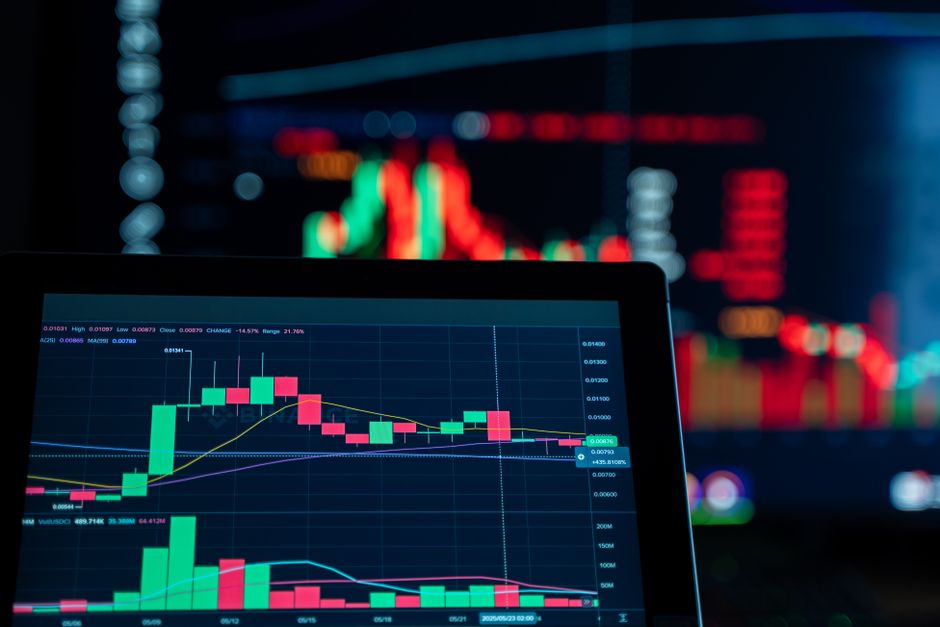
The gap between the all-time high of $294 and the current price is stark. SOL has retraced roughly 75 percent from its peak, which in traditional markets would signal a deep bear phase. But crypto moves faster. The 50-day simple moving average sits just below the current price, providing near-term support, while the 200-day SMA at $88.50 looms overhead as a resistance level that has not been reclaimed. This configuration, with the shorter average below the longer one, is what traders call a death cross setup, though the lines have not yet crossed decisively. The neutral RSI confirms what the price action suggests: no clear momentum in either direction.
Solana Price Prediction 2026: Technical Analysis and Key Levels
Short-Term Outlook (Q1 to Q2 2026)
The 14-day RSI hovering between 48 and 52 is about as neutral as an indicator gets. It tells us that SOL is neither overbought nor oversold, which means momentum traders have no clear signal to act on. This typically leads to range-bound price action, and that is exactly what we have seen over the last 30 days, where only 14 out of 30 days closed green.

Immediate support sits around $70, a level that has held on multiple tests. If that breaks, the next floor is closer to $60, a psychological round number that also aligns with prior accumulation zones. On the upside, resistance clusters between $82 and $85, right where the 200-day SMA currently sits. Until SOL can close a daily candle above that band, any rally should be treated as a dead-cat bounce rather than a trend reversal. The 47 percent green-day ratio over the past month reinforces the choppy, indecisive character of this market. Scalpers might find opportunities in this range, but swing traders have little to work with.
Mid-Term Targets (Q3 to Q4 2026)
The 200-day SMA at $88.50 is the line in the sand. A decisive break above it, confirmed by volume, would flip the medium-term outlook bullish and open a path toward $100 to $120. That range corresponds with prior support-turned-resistance from late 2025 and would represent a roughly 50 percent gain from current levels. Not a bad return for a six-month hold.
But not everyone sees that happening. The Binance user-input model, which aggregates crowd-sourced growth assumptions, projects a decline to roughly $25 by October 2026 in its default scenario. On the other end of the spectrum, Yahoo Finance and Benzinga have published a bullish case targeting $295, essentially a retest of the all-time high. That is a twelvefold spread between the bear and bull extremes, which tells you everything about the uncertainty baked into this market. Traders should watch for volume confirmation on any breakout above $88.50. A high-volume move through that level is a buy signal. A low-volume drift above it is a trap.
Long-Term Forecasts: Solana Price Prediction 2027 to 2030
The Bull Case: Can SOL Hit $500 or $1,000?
The most aggressive long-term forecast in circulation comes from the Yahoo Finance and Benzinga model, which projects an average 2030 price of $1,042 with a bullish case stretching to $1,258. These are not numbers pulled from thin air; they rest on a specific thesis. In this scenario, Solana becomes the settlement layer for global payments, functioning as a decentralized Visa that processes thousands of transactions per second at a fraction of a cent each. Institutional capital floods in through ETFs, sovereign funds allocate a sliver of reserves, and Solana’s DeFi and NFT ecosystems continue to dominate retail mindshare.
The $500 milestone is a different question. Most models that entertain it place the timeline no earlier than late 2027 or 2028, aligning with the next full bull cycle after the 2024 Bitcoin halving. Historically, altcoin peaks occur 12 to 18 months after a halving, which would put the next mania phase somewhere between late 2025 and mid-2026. If that cycle has already peaked with the $294 high in January 2025, then $500 is off the table until the following cycle. If the real top is still ahead, $500 becomes plausible but not guaranteed. Investors betting on four-digit SOL should plan on holding through at least one more boom-and-bust cycle.
The Bear Case: Why SOL Could Stay Below $100
Not every analyst is bullish. CoinDCX’s long-term model projects a 2030 price of just $84 to $92, barely above current levels. The Binance user-generated forecast is even more dire, showing a default trajectory that declines to $0.65 by 2028. While that extreme outcome is unlikely, it reflects real fears.
The bear case rests on three pillars. First, regulatory risk: the SEC has named SOL as an unregistered security in its lawsuits against Binance and Coinbase, and an adverse ruling in 2026 could trigger delistings and a flight of US capital. Second, network reliability: although Solana has had zero major outages since February 2024, the downtime narrative persists in retail memory and could resurface with a single incident. Third, competition from Ethereum layer-2 networks like Arbitrum and Base, which offer lower fees than Ethereum mainnet while inheriting its security and brand trust. Even in this pessimistic scenario, the current price of $73 offers limited downside from the $84 floor, suggesting the risk/reward skew may favor buyers over sellers at these levels.
Fundamental Analysis: What the Charts Don’t Tell You
Most Solana price prediction articles stop at technical indicators. That is a mistake. On-chain fundamentals tell a story that candlestick charts cannot capture, and right now that story is quietly bullish.
Solana consistently processes between 2,000 and 4,000 real transactions per second, compared to Ethereum’s roughly 15 TPS on its base layer. This throughput advantage is not theoretical; it translates into a user experience where DeFi trades settle in under 400 milliseconds for less than a penny. Total value locked in Solana DeFi protocols has been climbing steadily, and active wallet addresses continue to grow, signaling genuine adoption rather than speculative wash trading.
Staking adds another layer to the investment case. Solana offers a staking yield around 7 percent annually, with an inflation rate of roughly 4 to 5 percent. That means stakers earn a real yield of 2 to 3 percent after inflation, a rarity in crypto. Staking also removes tokens from circulation, reducing sell pressure. On the institutional side, the FTX estate still unlocks roughly 10 million SOL per month, a lingering overhang from the exchange’s collapse. But this is being partially offset by new entrants: Franklin Templeton has publicly praised Solana’s technology, and VanEck has filed for a spot Solana ETF, signaling that traditional finance is paying attention.
Macro conditions matter too. The Federal Reserve’s interest rate policy, inflation data, and global liquidity cycles drive risk-asset performance across the board. Crypto does not trade in a vacuum. The 2024 Bitcoin halving set the stage for the current cycle, and if history rhymes, altcoins should find their cycle top somewhere between 12 and 18 months after that event, placing the window in late 2025 or early 2026. Whether that top has already passed or is still ahead is the multi-trillion-dollar question.
Solana vs. Ethereum L2s: The Competitive Landscape
Investors weighing Solana against Ethereum’s layer-2 ecosystem need a clear comparison, not vague generalities. Here is how the numbers stack up:
Transaction Fees: Solana consistently under $0.01 per swap. Arbitrum and Base range from $0.10 to $0.50 depending on network congestion.
Finality: Solana achieves finality in roughly 400 milliseconds. Ethereum L2s settle in 10 to 15 seconds, a massive improvement over Ethereum mainnet but still an order of magnitude slower than Solana.
Total Value Locked: Solana’s DeFi ecosystem holds over $4 billion in TVL. Arbitrum and Base each hold between $2 billion and $3 billion.
Solana’s monolithic architecture, a single chain handling execution, consensus, and data availability, offers superior composability. Every application on Solana can interact with every other application atomically, without the bridging friction that fragments liquidity across Ethereum’s L2 landscape. For DeFi power users, this is a meaningful edge. That said, Ethereum’s developer mindshare remains dominant, and its brand carries weight with institutions that Solana has not yet matched. The race is not winner-take-all; both ecosystems can thrive. But Solana’s user experience is objectively better for retail, and retail drives bull markets.
Risk Factors Every SOL Investor Should Watch in 2026
No investment thesis is complete without a clear-eyed view of what could go wrong. Four risks stand out in 2026.
First, regulation. The SEC’s classification of SOL as an unregistered security in its enforcement actions against Binance and Coinbase remains unresolved. A final ruling against the exchanges, or against Solana specifically, could restrict US access and trigger a sharp selloff of 30 percent or more. Conversely, a favorable ruling or settlement could remove a major overhang and catalyze a rally.
Second, network stability. Solana’s engineering team has delivered over two years of uninterrupted uptime since the last major outage in February 2024. But the “Solana goes down” meme still circulates, and a single high-profile failure could damage sentiment disproportionately.
Third, token unlocks. Approximately $500 million in SOL is scheduled to unlock in 2026 from the FTX bankruptcy estate and staking reward distributions. This selling pressure, while predictable, could cap upside during periods of low demand.
Fourth, new competitors. Sui and Aptos, both built on the Move programming language originally developed at Meta, are gaining traction in total value locked and developer activity. They are not yet direct threats, but they are siphoning attention and capital that might otherwise flow to Solana.
People Also Ask: Your Top Solana Questions Answered
Will Solana hit $1,000? Only in the most aggressive bull case, and not before 2030. The Yahoo Finance and Benzinga model that projects a $1,042 average by 2030 assumes mass institutional adoption and Solana becoming a global payments rail. A realistic 2026 ceiling is closer to $300 to $350, which would represent a new all-time high.
Can Solana hit $500? Unlikely before late 2027 or 2028. Reaching $500 requires a full-blown super-cycle bull run of the kind that typically occurs 18 to 24 months after a Bitcoin halving. If the January 2025 high of $294 was the cycle top, $500 is off the table until the next halving cycle around 2028 or 2029.
How much will one Solana be worth in 2030? The consensus range is extraordinarily wide: $85 on the bearish end to $1,042 on the bullish end. The divergence reflects differing assumptions about regulatory outcomes, adoption rates, and the size of the total crypto market. Investors should treat any single-point 2030 prediction with skepticism.
Is Solana still a good buy in 2026? At $73 to $77, the risk/reward profile is favorable if you believe in a mid-term target above $100. The downside to the bear-case floor of roughly $84 is limited, while the upside to a new all-time high is substantial. However, conservative investors may want to wait for a confirmed break above the 200-day SMA at $88.50 before committing capital. For those taking a longer view, the network’s fundamentals and the broader market’s renewed interest in Solana’s ecosystem suggest that the current consolidation phase could be an accumulation opportunity. The network’s resilience and growing adoption, covered in recent analysis of Solana’s comeback story, support the case that the worst may already be priced in.
Final Verdict: Solana Price Prediction 2025 – Buy, Hold, or Sell?
Every forecast is a probability distribution, not a single number. Here is how the scenarios break down.
Bearish, with a roughly 30 percent probability: SOL falls to $25 to $50, driven by an SEC crackdown, a major network failure, or a broader crypto winter. This outcome would require a systemic shock, not just a continuation of current trends.
Base case, with a roughly 50 percent probability: SOL reaches $100 to $150, supported by steady ecosystem growth, ETF approvals, and the tail end of the post-halving market cycle. This is the scenario most consistent with current on-chain data and technical levels.
Bullish, with a roughly 20 percent probability: SOL retests its all-time high of $294 or pushes slightly beyond to $300 to $350, fueled by institutional inflows and a super-cycle narrative that positions Solana as the dominant smart-contract platform.
If you are a long-term investor with a multi-year horizon, dollar-cost averaging at prices below $80 is a reasonable strategy. If you are a trader looking for a higher-conviction entry, wait for a daily close above the 200-day SMA at $88.50 before going long. That level has been resistance for months, and a break above it would signal that the trend has shifted. This is not financial advice. Every investor’s situation is different, and you should always do your own research before committing capital.